
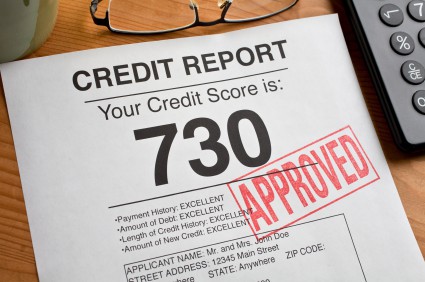
Do you understand the importance of maintaining a good credit score ? Let me explain with an example. Sometime ago at a Diwali party, one of the game prizes that was given away was for the highest number of credit cards that a person held. The winner of the game had 22 credit cards in his bulging wallet – obviously he did not know about how many credit cards he should have had or how credit card debt works. This story is not to give you advice about managing your credit cards but a more intrinsic matter – the importance of maintaining a good credit score.
Managing your credit as a whole to make you a prime borrower by having a high scoring credit report always helps when you want to take on loans to purchase your life dreams like buying a house or sending your daughter off for studies.
The importance of maintaining a good credit score – important facts
A credit report is a document issued by a credit information bureau that contains all the information on an individual’s credit history. This information is supplied to the bureau by its members (banks and other institutions). This pooled information is then accessed by its members when they want to evaluate and determine an individual’s credit risk and credit rating. To have a credit report, you need to have a minimum credit history of six months i.e. you should have held a credit card or have had some borrowing.
There are four credit bureaus in India : Credit Information Bureau (India) Ltd (CIBIL), Experian, Equifax Credit Information Services and Highmark Credit Information Services.
CIBIL is the oldest credit bureau in India and has many banks/institutions as its members, giving credence and depth to the information they provide. Besides giving information to the lenders, CIBIL also provides credit scores to individual borrowers for a fee of Rs 450.
Credit score is a result of complicated statistical analysis of the information that is available in your credit report. The score is a 3-digit number ranging from 300-900. The higher your score (it should be atleast 700) the higher your chances at getting credit. Other bureaus have similar rating systems. Earlier, even a low score did not hinder consumers from getting loans. Now banks are prudent and most borrowers who are being given loans are the ones that have a high score. Hence, investors should focus on the importance of maintaining a good credit score.
Basically when you apply for a loan or a credit card, the bank will check your credit score to understand your credit and payment history and to assess the risk of lending to you. Let’s say Sameer Arora, a 33 year old software engineer applies for a car loan. He already holds a home loan for Rs 25 lacs which he took around a year ago. All his payments have been on time. Sameer also holds 3 credit cards. When he applied for a car loan, he got rejected by the first bank and got a higher rate from the second bank who granted him the loan.
His credit score was quite low due to multiple loan inquiries which he had made over the years and his frequent credit rollover with minimal payment. This led to the rejection of car loan from the first bank and finally a higher rate of interest from the second bank. Sameer obviously did not know the importance of maintaining a good credit score.

Factors which drive the importance of maintaining a good credit score
Payment History: The most important factor is how promptly you pay your bills – especially credit card bills. Late payments, rolling over your debt regularly and defaulting on your EMIs will have a negative impact. Upto 36 months of history appeals on the report and even one default marks a strike against you.
Multiple new credit facilities: If a loan provider observes that you have recently been sanctioned a number of new credit facilities, it would mean that your monthly outflow in terms of EMIs are likely to have increased. Hence, it may have a negative impact on your loan application.
Outstanding loans: The bank/lender will want to check what is the outstanding loan amount and your monthly outgoing in terms of EMIs.
New Credit Inquiries: Don’t apply for unnecessary credit. This can signal that you are taking on a lot of debt, which worries lenders.
Tips to keep your credit score high
- Avoid defaulting on payments on your loans, credit cards or bills and try your best to make complete payments instead of paying minimum balances due on credit cards. A default will bring down your score sharply.
- If you have paid off a loan but your credit report doesn’t show this, contact the lender and ask them to make the necessary changes.
- Do not let accounts lie dormant, close down any account not in use.
- Your credit information report is not infallible. There could be mistakes, do generate and check your credit report regularly, Ensure that you report mistakes and have them corrected.
- Monitor your co-signed and joint accounts regularly. In co-signed or jointly held accounts, you are held equally liable for missed payments. This is extremely important because your joint holder’s negligence could affect your ability to access credit when you need it.
- Maintain a mix of credit. If possible, your credit history should contain a mix of a home loan, auto loan and a couple of credit cards. A high number of just credit cards may affect the chances of a loan approval negatively


Very well written. As more and more people are applying for loans it is important to have a good credit history.
Did a similar article on FAQ on CIBIL CIR Report and Score . Hope it helps your readers
Nice article. Learnt a lot about as I know little about this.
Couple of questions:
If I don’t have a credit card and no loan I will not have a credit history right? So can I be denied a loan because I dont have a history?
I have recently been listening a lot to Dave Ramsey who runs ‘Financial peace university’.
Acc to him (in the US) if you have a credit card and had no credit card debt it willl actually negatively impact your credit score when you take a home loan!
Dont really understand why. Hope we dont have something similar to this!
I am not too sure of this Pattu. I do not think it is right to think that “no history no loan”. I would think that one can get a loan without having any credit history as well.
The US information you put here is interesting – if you have a credit card and had no credit card debt it willl actually negatively impact your credit score when you take a home loan !
One of my colleagues recently applied for a personal loan. He has a credit card, though he says he has never used it. To his utter surprise, his loan application was rejected and he was told that his credit score is -1. How can it be negative if he never took a credit? Someone has to start somewhere…isn’t it?
Vow, what did he subsequently do then ?
Yes you rightly said someone has to start somewhere..and most of people start by using credit, taking loans- education, car loan, home loan etc.
I think the credit rating is flawed. A person with no credit card debt should get the highest rating. I dont have any credit cards in my name. My score will probably be ‘no information’ or not applicable. Dont know how this will be interpreted by a bank if I approach for a loan.
If I go the bank which maintains my salary acc then it should not be much of a problem but If I get lower rates elsewhere not sure how they will react.
Credit score is just a filtering parameter. Just like marks are an indication of scoring capability of a person(which often gets confused with intelligence). And having not studied is no reflection on the intelligence of the person but a company would be reluctant to hire him .
Similarly a person with no credit score is like shooting in the dark – he may or may not pay the loan. And in such a fast paced, me world banks would wonder why he would not have a credit card atleast or any kind of loan. These days people believe in spending and using credit.
“Similarly a person with no credit score is like shooting in the dark – he may or may not pay the loan.”
A person with a high score also may or may not. The system may not be flawed but its perception certainly is.
But not much can be done. It is like equity investing. All we can see is the rear view mirror to drive forward and one is unlikely to trust a NFO like me.
Let’s try to understand why do we need a credit score.
Quoting from my article Understanding CIBIL CIR report
Banks or lending institutions need to find if particular loan applicant can repay the loan,so they need to know applicant’s borrowing and repaying history. Say you apply for home loan from Lender D. Before Lender D gives you a home loan, it must check multiple things, such as your salary, your age, your past EMI repayment history. It gets your past EMI repayment history information from Credit Information Report and Score. It provides lending institution with an indication of the “probability of default” of the individual based on their credit history. Higher score means that the credit institution will have more confidence in your ability to repay the loan and hence, the better the chances of your application getting approved.
Please note that your credit score is credit score is one of the important factors, but not the only deciding factor for the banks to sanction you a loan. There are other factors also like your income, the income-expense ratio,your residence stability, your personal debts such as the loan to value ratio, the tenure of the loan, against assets are also taken into consideration.etc. All the banks have their own parameters and policies to sanction a loan. It’s important that you understand your Credit Information Report and what it takes to maintain a good credit history, so that is viewed favourably by Loan providers.
If you are responding to my comment: I fairly understand the need for a credit and other points you mentioned. I understand the score is only one parameter that argument works only for a reasonable score. Securing loan with a poor score is troublesome.
From what I hear the no history cases also have problems. Which I find to say the least amusing. Of course since there are other factors you cannot generalize.
Thanks for your reply.
Credit score is a 3 digit numeric summary of your credit history. The CIBILScore ranges from 300 to 900 points for those with credit-history of more than 6 months. The closer your Score is to 900, the more favorably your loan application will be viewed by a lender. In Oct 2012, CIBIL came up with CIBIL TransUnion Score 2.0.
CIBIL TransUnion Score 2.0 is a new, updated version of the Credit score which has been designed keeping in mind the current trends and changes in the consumer profiles & credit data.The CIBIL TransUnion Score 2.0 also introduces a risk index score range for those individuals who have a credit history of less than 6 months. These individuals were categorized under the category of “No History- NH” in the earlier version. The score range is from 1-5, with 1 signifying “high risk” and 5 signifying “low risk”. More at Understanding CIBIL CIR report
I had a problem with CIBIL report. I got in touch with Credit Sudhaar( http://www.creditsudhaar.com ) The entire experience was a pleasure, the price was right, the counsellors were always courteous and well informed.